Serrated washers (lock tooth)
Serrated washers work by gripping into a surface with their teeth. The teeth make serrations or scratches in the material, and the friction created helps to prevent a bolt from loosening.
You can get internal serrated washers, external serrated washers, and serrated washers that are both internally and externally serrated. Internal serrated washers have the advantage of enabling a cleaner finish, as the serrations are hidden better.
Spring washers
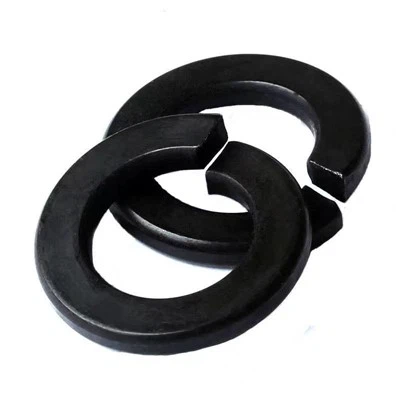
Spring washers use spring action to press against a bolt to prevent it from loosening. The spring action only comes into effect when a bolt starts to become loose. When a bolt is tight against a spring washer and the spring washer is flat, the spring does not exert any force. However, when the bolt starts to loosen, the spring exerts force on the bolt which helps prevent it from rotating.
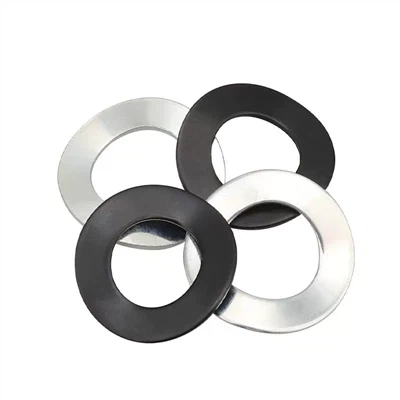
Split washers are a common type of spring washer. Conical washers achieve a similar spring effect by pushing against a bolt.
Schnorr safety washers
Schnorr safety washers use both serrated teeth and spring action. While their serrated teeth create friction, their conical shape produces a spring action when tightened against a bolt.
Nord-Lock washers
Nord-Lock washers use an innovative method to resist vibrations, which does not rely on friction or spring action. Nord-Lock washers use a pair of interlocking washers, which exert increasing force on the underside of a bolt as back-out occurs. Because Nord-Lock washers use tension rather than friction, they are capable of stopping loosening completely.